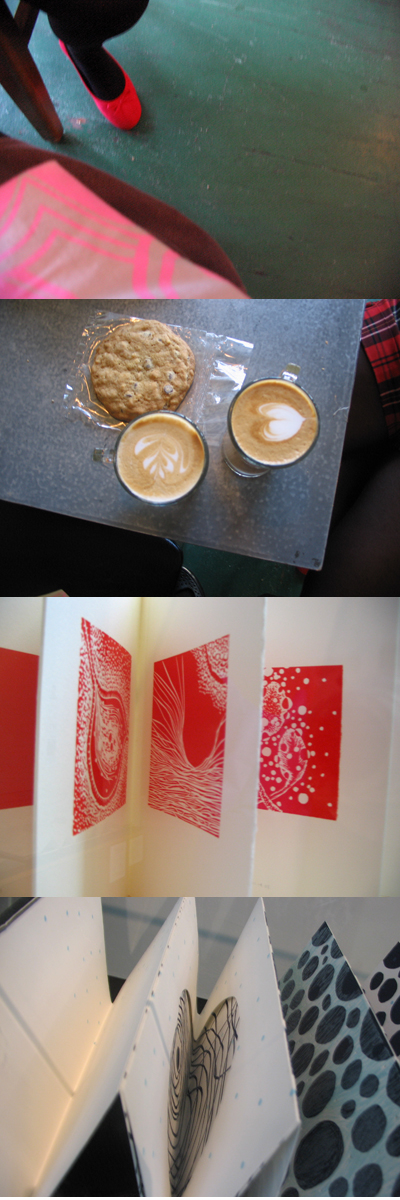
fika with my cousin karin
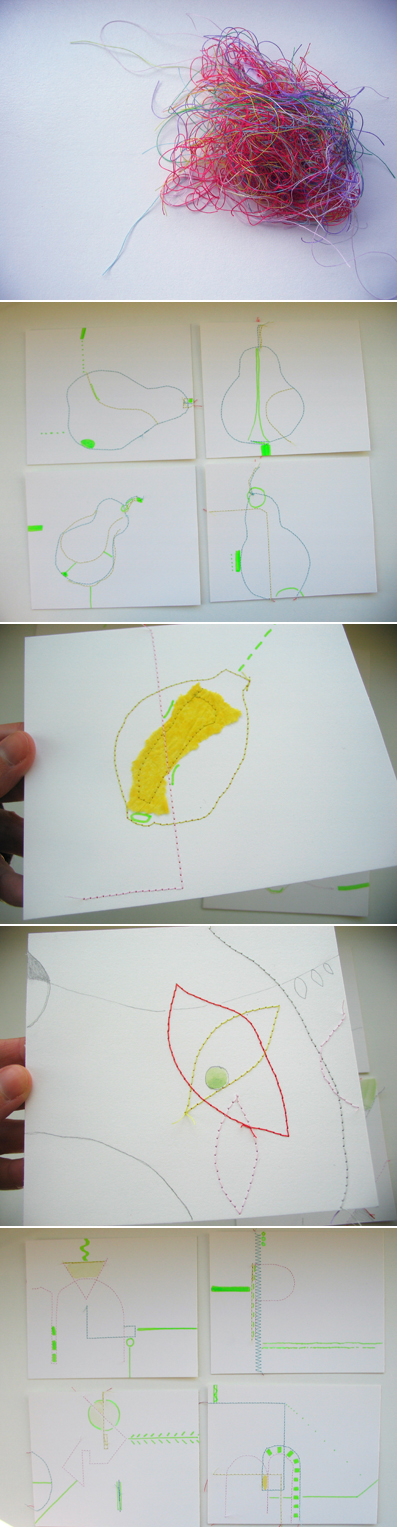
and this exhibit at sf center for the book
friday flickrs
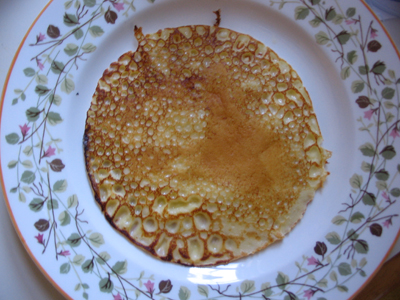
texture (and a funny look)
80 yells at floretta (i like their names)
floretta and 80
beautiful snow and light and trees

















One of the primary results—and one of the primary needs—of industrialism is the separation of people and places and products from their histories. To the extent that we participate in the industrial economy, we do not know the histories of our families or of our habitats or of our meals. This is an economy, and in fact a culture, of the one-night stand...he goes on to explain that the way to live economically and ecologically responsible lives is to build an agrarian economy, a local economy based on land. this is a subsistence economy and is a culture before it is an economy. (makes me think of this documentary i wrote about here.) he writes about how agrarianism is concerned with figuring out what is best (for the land, people, animals). "What is the best location for a particular building or fence? What is the best way to plow this field?..." All the questions are entirely site specific. local. and to answer them, one has to study the history of the place. knowledge must be passed down.
...In this condition we have many commodities, but little satisfaction, little sense of the sufficiency of anything...the industrial economy's most-marketed commodity is satisfaction...this commodity, which is repeatedly promised, bought and paid for, is never delivered...
...The persistent want of satisfaction is directly and completely related to the dissociation of ourselves and all our goods from our and their histories...
...When there is no reliable accounting and therefor no competent knowledge of the economic and ecological effects of our lives, we cannot live lives that are economically and ecologically responsible.